The Problem with WordPress in Kenya
WordPress powers over 40% of the world's websites. It's accessible, has thousands of plugins, and is easy to get started with. But for Kenyan businesses that are scaling, serving enterprise clients, or building anything with real custom logic, WordPress increasingly becomes a liability.
We've seen it repeatedly at Enchanted Technologies. A business gets a WordPress site built quickly, things look great, and then 18 months later the site is slow, riddled with plugin conflicts, carrying a growing security debt, and the client is locked into a stack that can't grow with them.
This isn't a WordPress-bashing article. It's a practical breakdown of when Laravel is the smarter business decision, and why so many Kenyan organisations are making the switch.
What Laravel Actually Is
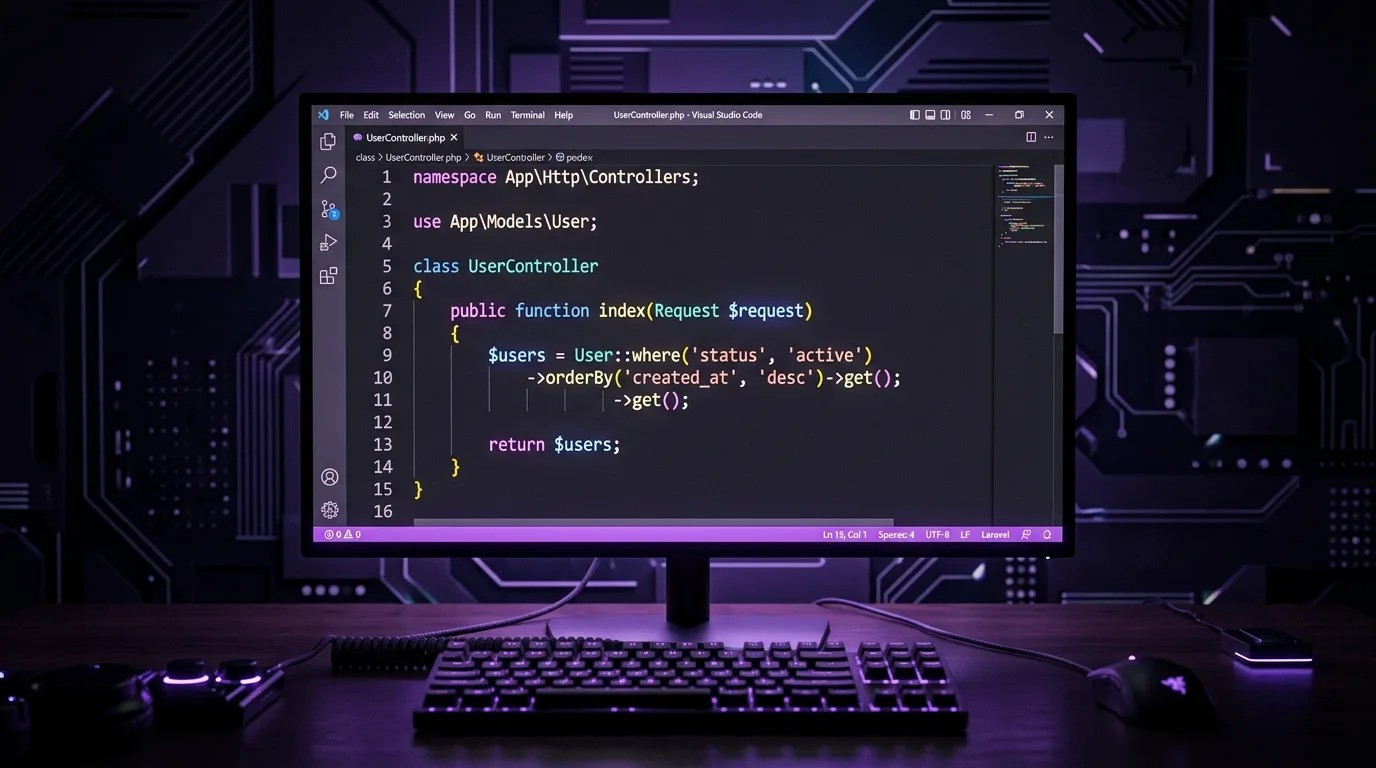
Laravel is a PHP framework — not a content management system. That distinction matters. WordPress is a CMS built on PHP. Laravel is a framework that lets developers build anything: CMSes, SaaS platforms, APIs, admin dashboards, e-commerce engines, automation tools — from scratch, with full control over every line of logic.
It's used by companies like Laracasts, Invoice Ninja, and a growing number of African tech companies building serious products. In the Kenyan market, it has become the framework of choice for companies that have outgrown off-the-shelf solutions.
Why WordPress Struggles at Scale
Plugin bloat: Most WordPress sites depend on 20–40 plugins. Each plugin adds code, potential conflicts, and security vulnerabilities.
Performance ceiling: WordPress can be optimised, but it has a fundamental architecture that limits how fast it can go under load.
Security exposure: WordPress is the most attacked CMS on the planet because it's the most common. Kenyan businesses face local and international bots constantly probing WordPress admin panels.
Custom logic is painful: Building anything genuinely custom on WordPress means fighting the platform rather than using it.
Database structure is rigid: WordPress uses a generic post-meta model that breaks down when you need relational data with real structure.
What Laravel Gives You
Full architectural control: You design the database, the business logic, and the API exactly as your business needs it.
Eloquent ORM: Laravel's database layer is clean, powerful, and efficient — far better than WP_Query for complex data.
Built-in security: CSRF protection, SQL injection prevention, password hashing, and authentication scaffolding are baked in.
Scalable by design: Laravel applications can be horizontally scaled, cached efficiently with Redis, and queued with Laravel Horizon.
Filament & Livewire: Modern Laravel development now includes Filament (an admin panel builder) and Livewire (reactive components) — meaning you get great admin UIs without the bloat.
Enchanted Technologies builds all client platforms on Laravel for exactly these reasons. From e-commerce engines to hospital management systems — the same framework scales across every use case.
Real-World Scenarios: Laravel vs WordPress
Scenario 1: Hospital Management System
A clinic wants a system for managing patient records, appointments, billing, and staff schedules. WordPress with plugins? You'll spend six months fighting ACF, WooCommerce hacks, and user role plugins. Laravel? You build exactly the data model the clinic needs — patients, appointments, prescriptions, invoices — with proper relational integrity, role-based access, and a clean admin panel.
Scenario 2: E-Commerce with Custom Business Logic
Plenser Industrial Spares, one of our clients, needed an industrial e-commerce platform where products had complex technical specifications, inventory was managed across categories, and B2B pricing varied by customer. WooCommerce would have been a constant workaround. Laravel gave us full control over the product catalog, pricing engine, and order management.
Scenario 3: Government or Institution Portal
Portals that handle citizen data, large file uploads, approval workflows, and audit trails need a framework built for security and compliance. Laravel's audit packages, policy-based authorization, and queue system are far better suited to this than any WordPress plugin stack.
The Cost Reality
Yes — a custom Laravel application costs more upfront than a WordPress site. A WordPress site can be delivered for KES 15,000–30,000. A Laravel application starts at KES 50,000 and rises based on scope. But the total cost of ownership tells a different story.
WordPress sites routinely need plugin renewals, security fixes, performance optimisation, and often a full rebuild within 2–3 years. Laravel applications are built for longevity. When we build a Laravel platform, we architect it so it can be extended, not replaced.
When WordPress Still Makes Sense
WordPress remains the right tool for: simple brochure websites with no complex logic, blogs managed entirely by non-technical users who are comfortable in the Gutenberg editor, and sites with a genuine short-term lifespan where speed-to-launch is the priority over quality.
For anything else — especially anything your business depends on — Laravel is the professional choice.
The Enchanted Technologies Approach
We've built Laravel systems for retail, agriculture, healthcare, and industrial clients across Kenya. Our stack typically includes Laravel + Livewire or Laravel + Next.js for the frontend, with PostgreSQL or MySQL, Redis for caching, and Docker for deployment.
If you have a WordPress site that's slowing you down, or a new project that needs to be done right, we'd love to talk.
→ Start a conversation at enchanted-tech.com